In light of the events at the beginning of the year, the limited reaction of the stock markets and exchange rates is surprising. The idea that aggressive actions are being taken but remain within a narrowly limited framework has become established. This no longer causes so much as a ripple. Whether it was the attack on Venezuela and the kidnapping of Maduro, the alleged attack on Putin’s private residence, or the investigation into US Federal Reserve Chairman Jay Powell, the markets remain unshaken.
Apparent Imperturbability
The price of precious metals has been increasing steadily since late autumn 2025, and this trend continues to this day.
In the case of precious and industrial metals, this development can be attributed to advance purchases by US companies looking to safeguard themselves against import tariffs, such as the 50% tariff on aluminium. This is leading to increasing physical shortages on the LME. Silver and platinum are already in short supply globally as production has not met demand for years. This is not the case for gold, palladium or industrial metals. However, price increases cannot be explained solely by advance purchases; they are also due to long-standing profitable short positions having to be covered to minimise losses in the face of sudden price rises. This process has recently been accelerated by rising margin requirements, which aim to stabilise price developments in the medium term.
However, developments in the precious metals sector demonstrate that market participants’ resilience has its limits. These markets are so small that even a modest influx of capital can trigger significant price fluctuations.
We may only be at the beginning of a shift towards precious metals.
The more that is invested in armaments and future conflicts, and the higher the level of debt, the more the intrinsic value of money is undermined, resulting in a rise in gold prices.
Conclusion: It is evident that the system is under stress, which is already having a visible impact on small-cap markets.
There Is Always a Possibility of Sharp and Abrupt Price Movements
Although there are no black swans, geopolitical or domestic political problems can trigger severe market reactions. In this context, it is possible that recognised trends today could break or even reverse temporarily (if valuations were extreme). In this issue, I will present example scenarios for each currency to give you an idea of what could happen one or two times this year. Due to the unpredictable nature of such events, it is clear that we must increase our responsiveness in order to react appropriately, purposefully and correctly to these developments.
Appropriateness and Objective:
- The best possible average exchange rate for purchasing or converting income is achieved through active management rather than passive processes. While there is no guarantee of improvement in every year, there is a high probability of average improvement in returns over a period of observation of more than three years.
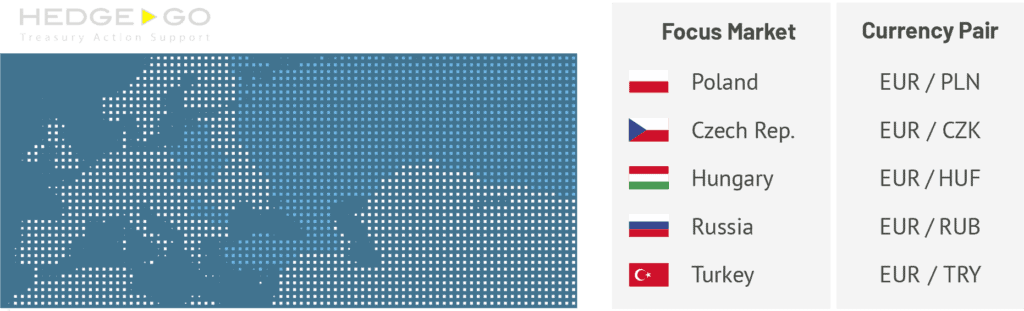
- There is a significant interest rate advantage for all currencies against the euro, which makes it sensible for all five of the currencies discussed in this issue to secure future payment obligations today. However, this was not always the case in the past. This advantage arises from two factors: interest rate differences when hedging, and the current trend of currencies rising against the euro, which is continuing. The favourable global economic outlook suggests that this trend will continue.