The ‘surprise war’ launched by the US and Israel against Iran has not only caused stock markets to plummet in recent days — a 8% drop over two days is not even a particularly strong reaction — but has also effectively doubled the price of petrol.
Situations like this are known as “risk-off” environments. Investors pull out of riskier assets and seek refuge in safer ones. However, it is noteworthy that the USD rose by almost 1.7% in response, and that no other asset class was spared.
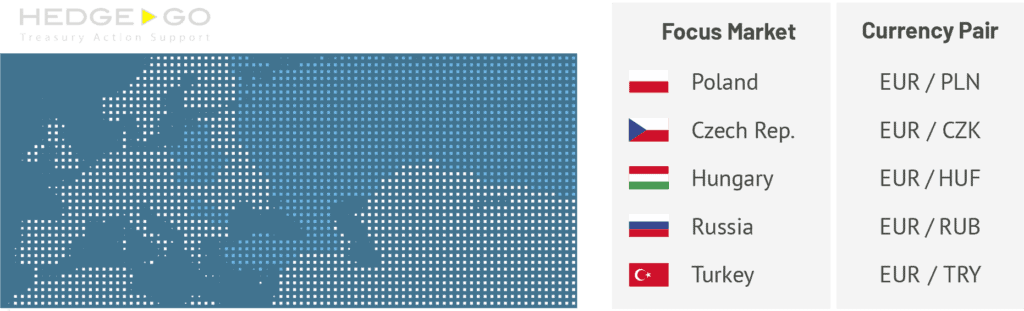
The HUF depreciated the most, falling from 375 to 390 EUR/HUF — a drop of almost 4% over two days.
As expected, precious metal prices initially rose, but then fell more sharply than the stock markets. This is also logical: when highly leveraged positions come under pressure, investors sell safe and highly liquid assets to limit losses. Precious metals were hit harder than the stock markets because, as is still the case, only very small amounts are invested in them, whereas a disproportionately larger volume is invested in both stocks and bonds.
The rise in bond yields for longer maturities is caused by the same factor that has led to a decline in precious metal prices. Typically, bond yields fall during stock market crashes as investors shift their holdings from stocks to bonds.
The Events of the Past Two Days (as of 04.03.2026) Have Highlighted a Danger
When investors turn to safe havens such as bonds and precious metals as stock markets fall, it is a clear sign of significant stress in the financial system. In the US alone, $1.2 trillion has been borrowed to purchase financial assets. Much like an iceberg, this is only the visible portion of the total volume. A much larger portion — probably three to four times as much — is not measurable, but is also invested with leverage.
Three years ago, I published my third book, Whiplash Markets. In it, I predicted that geopolitical factors would cause a significant increase in market volatility. For those with little experience or historical knowledge: Volatility has been unusually low over the past 16 years compared to the period from 1970 to 2010.
The volatility of the EUR/USD exchange rate has typically ranged between 4% and 7%, but during the aforementioned period, it fluctuated between 8% and 15%. Welcome to the new reality!
Greater Volatility Is Also Expected in the Case of Eastern European Currencies
Fluctuations aren’t necessarily a bad thing. However, failing to anticipate them can have serious consequences. Successfully managing them requires a high degree of attention and, in some cases, quick reflexes. Good planning can make this possible. However, no plan can withstand every future change. For this reason, I am opposed to rigid processes. This is all the more pertinent given that volatility tends to increase rather than decrease.
In order to implement an agile and sustainable approach, certain prerequisites are necessary.
- Attention and reaction time
- Risk budgets must be resilient in case things don’t go as planned
- The ability to handle frustration is important, given that only 60–80% of decisions will be correct