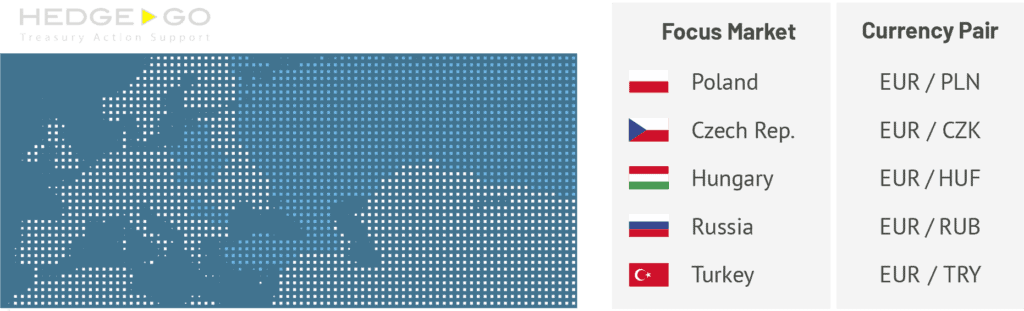
In the absence of any immediate, tangible triggers for a significant correction in the stock market, the positive trend for CEE currencies is expected to persist.
Historically, sharp interest rate hikes have led to temporary stock market slumps, as was the case in 2022. Four years ago, central banks had to reverse their policies in the face of sharp price increases following the Coronavirus pandemic, raising interest rates and refraining from quantitative easing.
In the coming months, the stock markets could experience a ‘vacuum phase’ and fall by as much as 20%, if Mr Trump attempts to externalise domestic political problems in the run-up to the midterms, in order to strive for unity at home. While I do not consider this impossible, I ultimately deem it unlikely because Americans are also dissatisfied with the Trump administration’s interventionism and will not accept any form of unprovoked escalation.
I expect the existing trends to continue gradually over the coming months. These are all positive for CEE and sideways for the RUB, while the TRY is expected to weaken slightly.
There Will Be no Crossfire from the USD in the Coming Month
I am bearish about the future of the USD and expect it to be significantly weaker against the rest of the world in the medium to long term.
In the short term, I do not expect the USD to break out of the 1.1700–1.1900 EUR/USD range over the next 4–8 weeks.
If the USD moves towards 1.17 (with a maximum of 1.1620), CEE currencies will tend to weaken slightly against the euro. Ultimately, they are mocha cup currencies. However, if the euro weakens significantly, the smaller currencies will also weaken more significantly against the USD and thus against the euro.
However, This Also Makes the Dual Effect in the Longer Term Clear:
Strong stock markets and a weak US dollar are increasing the value of CEE currencies.
As I said, I don’t see any immediate structural danger.
I recommend buying Hungarian forints at 383–385 EUR/HUF, Polish zlotys at 4.25 EUR/PLN, and Czech crowns at 24.65–24.80 EUR/CZK. These targets are 2–3% away from the current price and offer virtually optimal buying opportunities at present.
Turkey Is on Track
For the past year, the central bank has been following my advice of the past two and a half years by keeping interest rates well above the inflation rate. Core inflation has fallen below 30% for the first time in years, and the downward trend in prices is continuing, partly because the Turkish lira (TRY) is no longer depreciating against the US dollar (USD). The depreciation rate has been 2% since the beginning of the year, equivalent to just under 17% per annum. This is easily exceeded by an interest rate of 37%. This makes the TRY an interesting investment opportunity, which I am also pursuing in asset management.
What to watch out for: The TRY is strongly correlated with the USD. In ‘Issue 3: USD’, I recommended buying USD when it reached 1.19 and selling EUR/USD at 1.17. I apply this strategy to my capital investments by providing TRY investments with an opportunistic USD overlay hedge. This offsets the depreciation rate of the TRY against the USD, meaning that the interest can be collected in full or even increased slightly.